
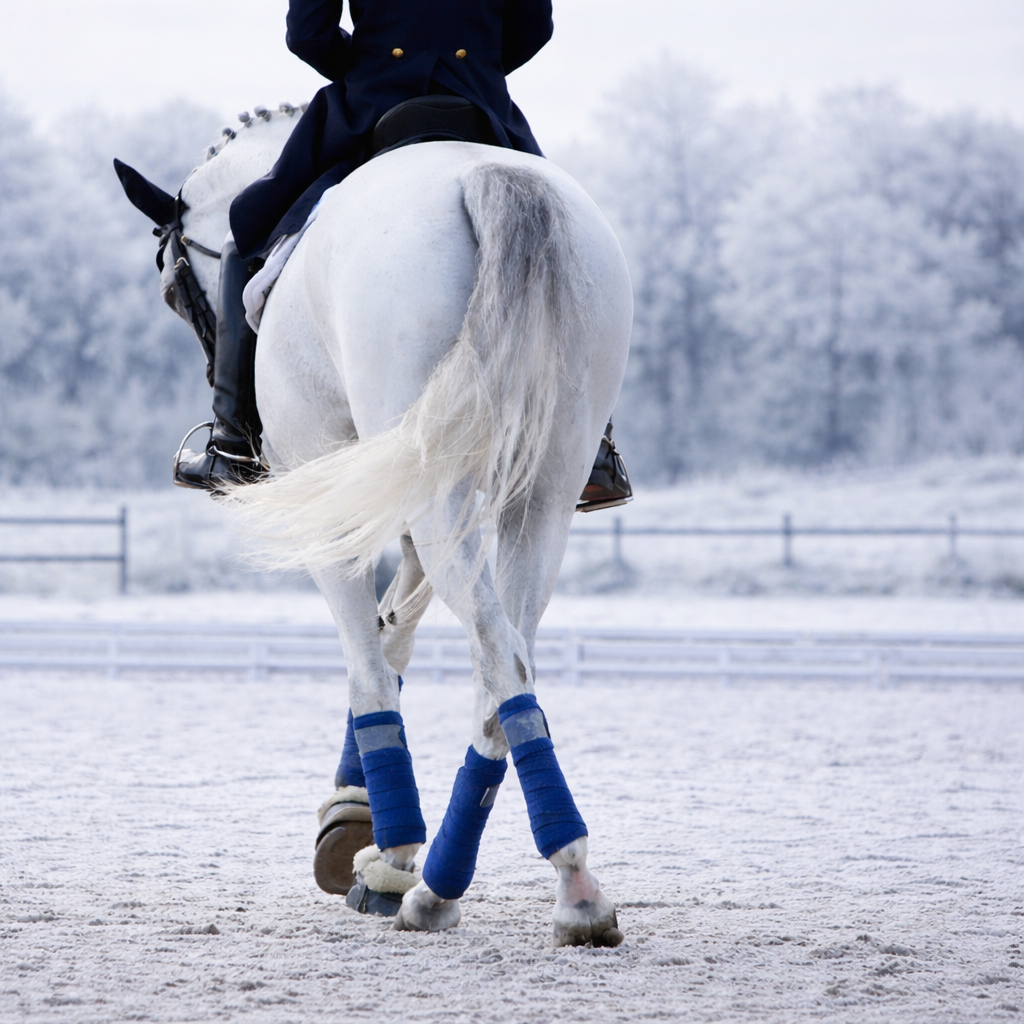
What to Watch For & How to Support Flexibility All Year Round
Winter can be a challenging time for horses and ponies in many ways, and joint health is one area that often needs extra attention. Movement is essential for maintaining healthy, flexible joints, yet during the colder months many horses naturally become less active.
Understanding why winter affects joint health – and how to support your horse through it can make a significant difference to long-term soundness and comfort.
Why Horses Move Less in Winter
Longer time stabled
When horses spend more hours in the stable, their natural movement is greatly reduced. Even with good stable management, they simply take far fewer steps than when turned out, which can lead to stiffness over time.
Reduced exercise
Shorter days, poor weather, icy roads and waterlogged arenas often limit how much ridden or in-hand exercise we can do. Even when time allows, conditions may make regular work unsafe or impractical.
Challenging Ground Conditions
Horses with winter turnout may still move less when ground conditions are poor. Muddy fields, frozen ground, or forage provided in one location (such as a hay bale) can all reduce natural roaming.
Cold Weather & Age-Related Joint Stress
Cold temperatures can make joints feel stiffer – particularly in older horses or those with existing joint concerns. Just as we feel less flexible in winter, horses can also be affected.
Practical Tips for Supporting Winter Joint Health
Keep them moving.
Where daily turnout is restricted, look for safe alternatives:
- Short periods of turnout in a school or yard
- Controlled turnout with good footing
- Gentle in-hand walking or groundwork
Even limited movement is far better for joint health than prolonged periods of standing still.
Where possible, allowing turnout with a companion or stable group also supports mental wellbeing, encouraging natural movement.
Keep them warm.
While horses generally cope well with cold weather, older or stressed joints may benefit from extra warmth.
- Stable bandages can help retain warmth in the lower limbs, but should only be used if you are confident and experienced with correct application.
- Stable wraps are often a safer, more practical alternative and are quick and easy to apply.
Feed the joints.
Joint supplementation is well-researched and widely recognised as a valuable part of winter care.
Modern management, combined with the demands of hacking, schooling, competition or performance work, places additional strain on joints. A high-quality joint supplement helps provide the nutrients needed to support flexibility, comfort and long-term soundness.
Key tips when choosing a joint supplement:
- Select a product suited to your horse’s age, workload and joint needs
- If you compete, choose a BETA NOPS-accredited supplement to ensure suitability for competition use
Supporting Soundness All Winter Long
Winter doesn’t have to mean stiffness or reduced comfort. By keeping your horse moving where possible, protecting joints from the cold, and providing targeted nutritional support, you can help maintain flexibility and soundness right through the colder months – and beyond.
Explore the Superflex range today and choose the right joint support for your horse this winter.
Which Superflex is right for you and your horse?
Superflex Original
A ‘sound’ investment for young and early career horses. Research shows that adaptations in the joint capsule due to joint stress can be seen even before some horses have started their ridden career. It makes sense to choose a well-formulated, trusted product to provide the nutrients required for joint growth and repair, as they develop into their career.
Superflex Liquid
The benefits of Superflex Original in an easy to feed liquid supplement. Designed to support flexibility for life in all horses and ponies, Superflex Liquid is a good choice for those who prefer a liquid mixed into feed.
Superflex Senior
As horses age joint stress is inevitable and more evident. Therefore, we recommend Superflex Senior to maintain soundness in all working horses once they get into their teens and beyond. However, ‘Senior’ doesn’t necessarily have to mean ‘senior’ in age.
Superflex Senior is also the ideal choice for younger horses if they are working hard, or if they have any history of concerns with joint health.


