Why Is Autumn a High-Risk Time for Laminitis?
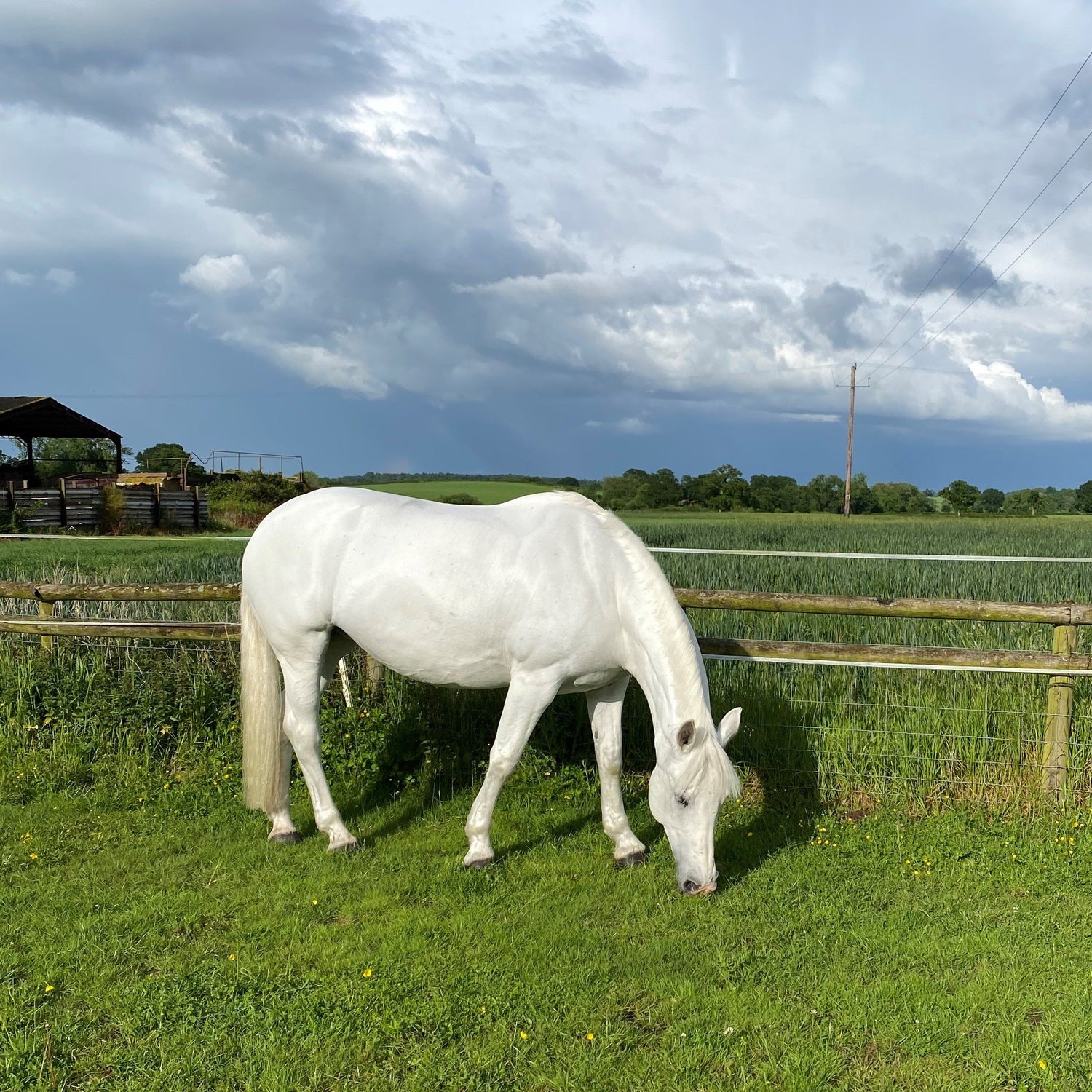
Laminitis is often associated with spring grass and its potentially high sugar content, but the risk does not disappear when summer ends. Autumn is recognised as the second-highest risk period for laminitis after spring, making it an important time to review your horse or pony's grazing and diet.
Research comparing laminitis risk during the grass-growing periods of spring and autumn with the colder winter months found that risk during periods of grass growth was around three times higher.¹
For owners of horses and ponies prone to laminitis, autumn therefore deserves just as much attention as spring when it comes to grazing management, forage and nutritional support.
Autumn is the second-highest risk period for laminitis after spring.
How Dry Summer Conditions Can Affect Autumn Grass
Autumn can present an additional challenge following a long, hot and dry summer.
Extended dry conditions can severely restrict grass growth. When rain eventually arrives, this can trigger a sudden flush of new grass that horses and ponies may not have experienced for several months.
Grass growing under drought-stressed conditions can also have a higher concentration of non-structural carbohydrates (NSC) than typical healthy pasture.² However, NSC levels can vary considerably depending on factors including time of day, sunshine and temperature.
This means that the combination of dry summer conditions, changing weather and renewed autumn grass growth can create particular challenges for horses and ponies that are prone to laminitis.
This is especially important for horses and ponies with Equine Metabolic Syndrome (EMS) or insulin dysregulation (ID).
What New Research Tells Us About Autumn Laminitis
The recent European Workshop on Equine Nutrition Conference (EWEN 2026) held in Portugal discussed some interesting new areas of laminitis research, that we can take into our practical day-to-day feeding of at-risk horses and ponies.
Grazing, WSC and laminitis risk
A small citizen-science study involving owner-recorded cases of laminitis supported previous research showing a trend between water-soluble carbohydrate (WSC) levels in grazing and the incidence of laminitis.³
The study also reported that sunny days were associated with an increased risk of laminitis episodes, while cloudy conditions were associated with a reduced risk.
One possible explanation is the effect of sunlight on WSC accumulation within the grass. However, this was a small study and individual variation was observed, so further research is required.
Know your horse or pony and pay attention to their individual risk factors and how they respond to changes in weather and grazing.
NSC levels and insulin dysregulation
Another area of research looked at NSC levels in pasture and the insulin response of horses and ponies with and without insulin dysregulation.⁴
Pasture NSC levels were measured every two hours and compared with insulin responses.
In insulin-dysregulated animals, the insulin response was considerably higher than in non-insulin-dysregulated animals and closely followed changes in pasture NSC levels.
The research also found that pasture NSC levels increased gradually during the day, reaching their highest level at around 7pm during the summer period, with the lowest levels occurring in the early morning
For good-doers and horses or ponies requiring restricted grazing, the timing of grazing may be worth considering, particularly limiting access to pasture during the late afternoon and evening when NSC levels may be higher.
Managing NSC Intake Through Feeding
Recent research also highlights that it may not simply be the total amount of NSC consumed during a day that matters.
The amount of NSC provided per meal may also be important.
Trials found that feeding NSC at levels greater than 0.13g NSC/kg bodyweight induced an insulin response in insulin-dysregulated animals, even when the forage itself had a relatively low NSC percentage.⁴
This provides an important practical consideration when designing diets for horses and ponies at risk of laminitis: how a diet is fed can be just as important as what is fed.
Example diet: 400kg insulin-dysregulated pony in light work
As an example, consider a 400kg insulin-dysregulated pony in light work.
At a diet requirement of 2% bodyweight, the pony would receive:
- 8kg dry matter per day
- 7.2kg DM of soaked hay, or equivalent grazing
- 800g low-calorie alfalfa meal
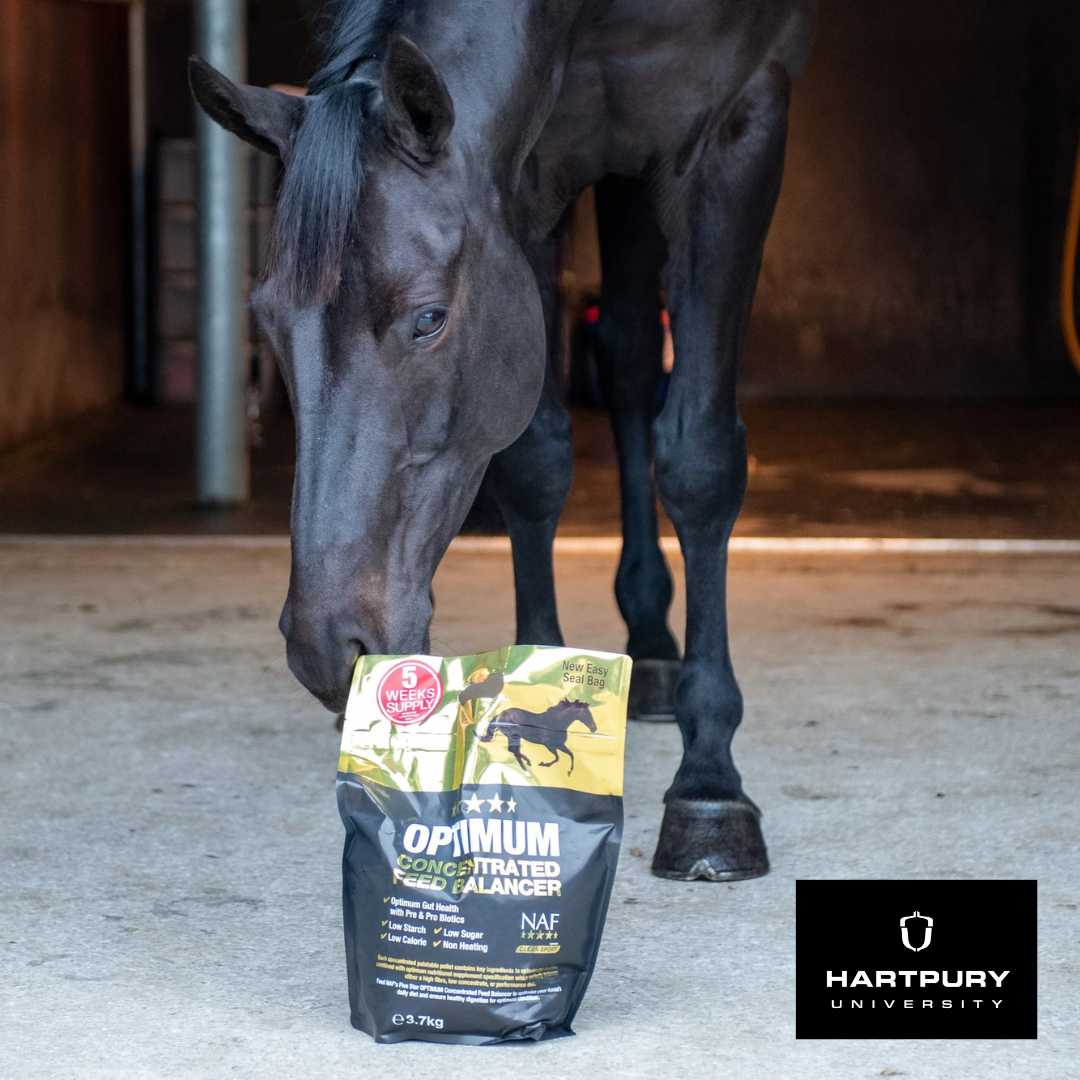
- 50g NAF Optimum Pellets
NSC <0.13g /kg BW = an aim of less than 52g NSC per meal.
|
Option 1 One feed a day |
NSC |
Grams / meal |
g NSC/ meal |
|
Low- cal Fibre Feed |
10.5% |
800g |
84g |
|
NAF Optimum Balancer* |
14% |
50g |
7g |
|
|
NSC per meal |
91g |
|
|
Option 2 Two feeds a day 2 x |
NSC |
Grams / meal |
g NSC/ meal |
|
Low- cal Fibre Feed |
10.5% |
400g |
42g |
|
NAF Optimum Balancer* |
14% |
25g |
3.5g |
|
|
NSC per meal |
45.5g |
|
*NSC calculated from analysis of 8% Starch and 6% Sugars
Why splitting feeds can make a difference
The example demonstrates how feeding the same total amount across the day can produce a very different NSC intake per meal.
With one bucket feed per day, the example provides approximately 91g NSC per meal.
When exactly the same total feed is divided into two meals, the NSC intake falls to approximately 45.5g per meal.
That brings the NSC per meal below the example maximum recommendation of 0.13g NSC/kg bodyweight.⁴
The key message is that feeding management matters alongside feed selection.
For horses or ponies with insulin dysregulation or EMS that are in more intense exercise and require higher-energy diets, it may be necessary to consider splitting bucket feeds into three or four meals per day to help meet the recommended NSC-per-meal level.
The same total daily feed can provide a very different NSC intake per meal depending on how it is divided.
Nutritional Support for Horses at Risk of Laminitis
Careful grazing management and appropriate feeding should form the foundation of a diet for horses and ponies at risk of laminitis.
Targeted nutritional support may also help support normal metabolic and digestive function.
Supporting microbiome stability
The horse's digestive system contains a complex population of microorganisms within the hindgut. Maintaining a healthy hindgut microbial population is fundamental to digestive health and overall resilience.
This can become particularly important when managing horses where changes in the daily diet, including changes in NSC intake from grass, may affect their insulin response.
Prebiotics used alongside live probiotic yeast and postbiotic metabolites can provide multiple forms of microbiome support.⁵˒⁶
Herbal ingredients such as ginger and liquorice may also be used to support the digestive environment.
Supporting the digestive environment
Clay-based ingredients, including the mycotoxin binder bentonite, are known to bind certain compounds within the gut and may help maintain the intestinal environment when horses are facing dietary and digestive challenges.
Supporting insulin response
Magnesium is involved in glucose metabolism and insulin sensitivity, and low magnesium is recognised as a potential risk factor for insulin-dysregulated horses.⁷
For horses at risk of insulin dysregulation, ensuring that the overall diet provides appropriate levels of essential nutrients is therefore an important consideration.
Supporting hoof resilience
Although laminitis is primarily a metabolic condition rather than a disease of the hoof itself, its effects can be seen in the hooves.
Supporting hoof resilience through appropriate nutrition can therefore form part of a wider nutritional management strategy.
Zinc contributes to keratin production and nitric oxide signalling, while sulphur is an important nutrient for keratin health. Sulphur-containing compounds such as MSM may therefore be considered as part of a broader approach to hoof nutritional support.
Five things to consider:
1. Monitor grass growth
Following a dry summer, rainfall can lead to a sudden flush of autumn grass.
2. Consider the timing of grazing
Research indicates that pasture NSC levels can vary throughout the day, with higher levels observed later in the day during summer.⁴
3. Think about NSC per meal
The amount of NSC provided at each meal may be important for insulin-dysregulated horses and ponies.
4. Split bucket feeds where appropriate
Dividing the same daily amount into smaller meals can reduce the NSC provided per meal.
5. Consider targeted nutritional support
Digestive, metabolic and hoof nutritional support may form part of a wider management plan for horses and ponies at risk of laminitis.
Conclusion
Autumn laminitis is an important consideration for owners of horses and ponies at risk of metabolic disease.
Research is helping us understand more about NSC levels in grazing and forage and how feeding management may affect insulin responses in insulin-dysregulated animals.
Following a dry summer, sudden autumn grass growth can present an additional challenge. By carefully monitoring grazing, adapting the diet where necessary and considering how feeds are divided throughout the day, owners can take practical steps to help manage the risk of laminitis.
Written by:
Kate Hore,
Head Nutritionist. RNutr (Animal), BETA ENFAR Nutr, R.Anim.Technol (Cert), BSc(Hons).
Find out more about Kate and our Technical Team HERE.
Glossary
BW: Bodyweight of your horse or pony.
DM: Dry Matter: Analytical level of the dry matter in forage or feeds. All feeds will contain some water, with some being much more significant than others.
EMS: Equine Metabolic Syndrome. A metabolic disorder associated with insulin dysregulation, increased risk of laminitis and, often, abnormal fat distribution.
ID: Insulin Dysregulation. An abnormal response to insulin, resulting in elevated blood glucose following carbohydrate intake. Replaces IR (insulin resistance), as better describing both excessive insulin response and reduced insulin sensitivity.
NSC: Non-Structural Carbohydrates: The combined amount of water-soluble carbohydrate (see WSC) and starch in a feed or forage.
WSC: Water-Soluble Carbohydrates: Those carbohydrates that dissolve in water; primarily simple sugars and fructans in forage.
References:
-
Knowles EJ, Elliott J, Harris PA, Chang YM, Menzies-Gow NJ. Predictors of laminitis development in a cohort of non-laminitic ponies. (2023) Equine Vet J. Jan;55(1):12-23. doi: 10.1111/evj.13572. Epub 2022 Apr 1.
-
Kagan IA. Water- and Ethanol-Soluble Carbohydrates of Temperate Grass Pastures: a Review of Factors Affecting Concentration and Composition. (2022) J Equine Vet Sci. Mar;110:103866.
-
Schmidt V.A.M et al. (2026). Monitoring laminitis incidence and WSC levels – A citizen science-based pilot study. Proceedings of EWEN 2026, Lisbon
-
Askin M.J, Harris P.A, McClendon M.E and Adams SS. (2026). Nonstructural carbohydrates and management strategires influence on horses with insulin dysregulation. Proceedings of EWEN 2026, Lisbon.
-
Respondek F, Goachet AG, Julliand V ‘Effects of dietary short-chain fructooligosaccharides on the intestinal microflora of horses subjected to a sudden change in diet’ (2008) J Anim Sci 86(2):316-23
-
Garber A, Hastie PM, Farci V, McGuinness D, Bulmer L, Alzahal O, Murray JMD ‘The effect of supplementing pony diets with yeast on 2. The faecal microbiome’ (2020) Animal 14(12):2493-2502