
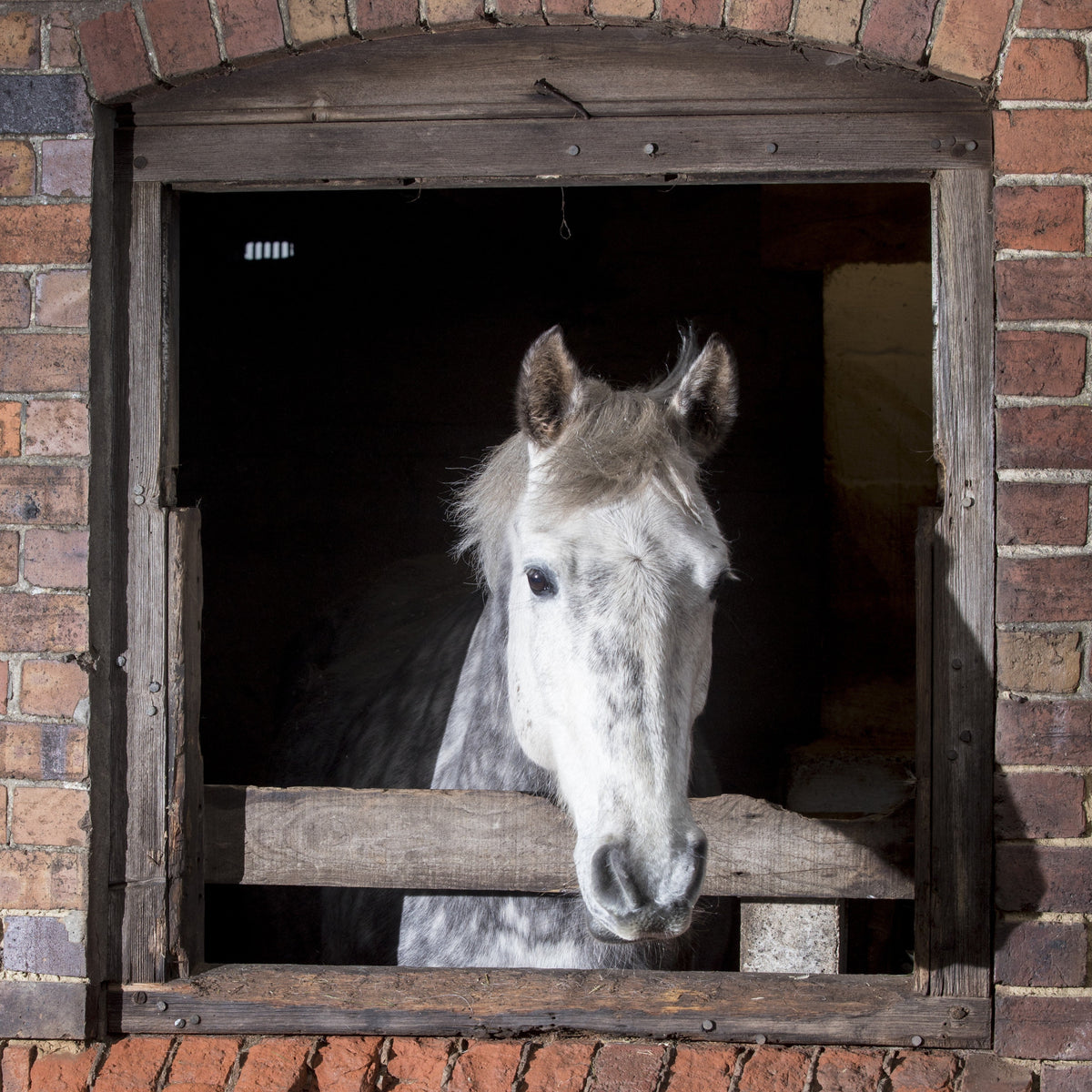
As the days get shorter and the weather turns colder, many horse owners notice a change in their horse's behaviour. A horse that has been settled throughout summer may suddenly feel fresher, more reactive or spookier when ridden.
So, why do horses sometimes seem more excitable in autumn and winter? And could a calming supplement be part of the solution?
The answer often starts with understanding the changes in your horse's daily routine.
Why Do Horses Become Fresher or Spookier in Winter?
During the summer months, many horses enjoy extended turnout, plenty of movement and regular interaction with other horses. As autumn and winter arrive, wet weather, muddy fields and deteriorating ground conditions can mean more time spent stabled and less opportunity for exercise.
Although winter stabling can provide warmth, shelter and practical benefits for pasture management, it can also bring significant changes to a horse's routine.
Reduced physical activity, fewer opportunities for natural grazing and changes in social interaction may contribute to frustration and unwanted behaviours. You might notice your horse becoming more forward-going under saddle, more reactive to everyday sights and sounds, or more difficult to handle on the ground.
Understanding these seasonal changes is an important first step when considering calming supplements for horses and other ways to support a calm, focused horse throughout the winter months.
1. Reduced Turnout and Exercise
Cold, dark and wet weather often means more time in the stable and fewer opportunities to ride, particularly when outdoor schools and fields become unusable.
Horses thrive on consistency, and a sudden change in exercise and turnout can be difficult to adjust to. The extra energy you see in the field may be entertaining, but it can also be a reminder to review your horse's daily routine and activity levels.
How to help your horse during winter
- Plan a consistent exercise routine. Aim to meet your horse's individual exercise requirements, taking their age, fitness, health and workload into account.
- Explore alternative riding facilities. Consider sharing the cost of hiring an indoor school with friends when field conditions are unsuitable.
- Make the most of turnout. Where conditions and your horse's individual needs allow, maintain regular turnout and opportunities for movement.
- Keep routines predictable. Consistent feeding, exercise and handling can help your horse adjust to seasonal changes.
Good management is the foundation of winter wellbeing. Where additional support is needed, it may also be worth exploring the role of a suitable calming supplement alongside your horse's existing routine.
2. Mental Stimulation and Stable Enrichment
Reduced movement is only part of the picture. Horses also need opportunities to forage, explore and interact with their environment.
When these natural behaviours are restricted, some horses may become frustrated or develop unwanted stable behaviours. These can include throwing feed buckets, chewing rugs and, in some cases, stereotypic behaviours such as weaving.
Ways to keep your horse occupied in the stable
Encourage natural foraging
Forage should remain a central part of your horse's diet. Where appropriate, dividing the forage ration between several suitable feeding points can encourage natural foraging behaviour and provide more opportunities for movement.
Always ensure that feeding arrangements are safe, that forage provision meets your horse's needs and that any changes are appropriate for their individual circumstances.
Introduce suitable enrichment
Adding NAF Treats to a sturdy, horse-safe treat ball or other suitable enrichment toy can provide additional stimulation.
Make time for positive interaction
A regular thorough groom not only keeps them looking good, but is mentally relaxing for your horse and is a great chance to spot any changes.
3. Social Interaction, Learning and Confidence
Horses are social animals, and their behaviour is influenced by a combination of inherited characteristics, previous experiences, learning and their environment.
When winter management limits opportunities for normal social interaction, it becomes even more important to provide positive, consistent experiences.
Rather than assuming that a horse is naturally difficult or reactive because of its breed or temperament, consider the wider picture. How much exercise are they getting? Has their routine changed? Are they comfortable, and do they have sufficient opportunities for social interaction and mental stimulation?
Positive training experiences can help horses develop confidence and improve their responses to familiar situations. Consistent handling and an understanding of individual needs are important parts of supporting a calmer, more focused horse.
4. Can Nutrition Help Support a Calm, Focused Horse?
Alongside good management, nutrition may have a role in supporting behaviour and trainability in some horses.
Certain nutritional approaches have been investigated for their potential effects on equine behaviour and cognitive performance. However, a calming supplement should be considered as part of a wider management plan, rather than a replacement for appropriate exercise, forage, social contact or veterinary care.
If you are exploring calming supplement for your horse, consider your horse's individual temperament, workload, diet and the specific challenges you are trying to address.
Understanding the research: Spontaneous Blink Rate
Spontaneous Blink Rate (SBR) has been investigated in equine behavioural research as a potential indicator associated with impulsivity.
Impulsivity describes a tendency to act without sufficient consideration. Studying behavioural indicators such as SBR can help researchers investigate how horses respond to tasks and whether targeted nutritional interventions are associated with measurable behavioural changes.
This research provides an interesting basis for exploring how nutrition may support learning, focus and trainability in horses.
5. NAF Five Star Magic: Research into Equine Calmness and Trainability
NAF Five Star Magic has been investigated in a controlled feeding trial exploring how targeted nutritional support can influence equine behaviour, focus and trainability.
Led by Dr Andrew Hemmings, the research used a go/no-go task, described as an equine intelligence test, to assess aspects of learning and impulse control. The study monitored Spontaneous Blink Rate (SBR) alongside behavioural responses to explore the relationship between nutrition and equine behaviour.
The results were encouraging: Horses in the study showed reductions in spontaneous blink rate and inappropriate responses associated with impulsivity, highlighting the potential of targeted nutrition to support more considered behavioural responses.
Importantly, the findings support an approach focused on helping horses remain calm, attentive and receptive to learning, without relying on sedation.
After all, the aim of a good calmer is not to change your horse's personality, but to help them feel more settled and focused, so you can enjoy the horse you know and love.
As Dr Andrew Hemmings put it:
“Still your horse, just more trainable.”
Explore NAF Five Star Magic to learn more about the product, its intended use and how it may fit into your horse's nutritional routine.
For further information about the trial, watch the NAF Five Star Magic research video:
Watch the NAF Five Star Magic trial video
6. Supporting Your Horse Through Autumn and Winter
A fresh or spooky horse in winter may be responding to several changes at once. Reduced turnout, changes in exercise, limited enrichment and disrupted routines can all influence behaviour.
A considered approach combines good daily management with attention to your horse's individual needs.
Your winter checklist:
- Maintain an appropriate exercise and turnout routine.
- Provide sufficient forage and opportunities for natural feeding behaviour.
- Introduce safe stable enrichment and positive interaction.
- Monitor changes in behaviour and investigate potential causes of discomfort or stress.
- Review your horse's diet and consider whether targeted nutritional support may be appropriate.
With thoughtful management and appropriate support, you can help your horse navigate the seasonal changes and work towards a calmer, more focused partnership right through to spring.
Discover NAF's range of calming supplements and find out more about supporting your horse's temperament, focus and wellbeing.
https://nafequine.com/collections/calming-behaviour
Frequently Asked Questions About Horse Calmers in Winter
Why is my horse more excitable in winter?
Reduced turnout, changes in exercise, less time spent foraging and alterations to daily routines may contribute to increased excitability in some horses. Pain, discomfort and other health issues can also affect behaviour, so persistent or sudden changes should be investigated.
Can a horse calmer help in winter?
A suitable calming supplement such a NAF Magic may provide nutritional support for some horses as part of a wider management plan.
What else can I do to calm a fresh horse?
Start by reviewing exercise, turnout, feeding, forage provision and opportunities for social interaction. Consistent routines, safe stable enrichment and positive training may also help. If your horse's behaviour changes unexpectedly, consult your vet.
What should I look for in a calming supplement for horses?
Consider the product's intended use, ingredients, feeding instructions and suitability for your horse. If your horse competes, check the relevant competition rules and current prohibited-substance requirements. Seek advice from your vet or equine nutrition professional if you are unsure.
Does a calmer sedate a horse?
Not all calming supplements are intended to sedate. Products differ in their formulation and intended effects, so check the product information carefully. The aim should be appropriate support for calmness and focus, not to mask discomfort or alter behaviour without understanding its cause.
Written by the NAF Technical Team
Find out more about our Technical Team here.
Selected References
- McBride, S. D. et al. (2022). The impulsive horse: Comparing genetic, physiological and behavioural indicators to those of human addiction. Physiology & Behavior, 254.
- Roberts, K. et al. (2016). Neural modulators of temperament: A multivariate approach to personality trait identification in the horse. Physiology & Behavior, 167, 125–131.
- Roberts, H. et al. Effect of three magnesium based feed supplements on inferred measures of dopamine activity and cognition: A pilot study. International Society for Equitation Science, Proceedings of the 14th International Conference, Rome.

