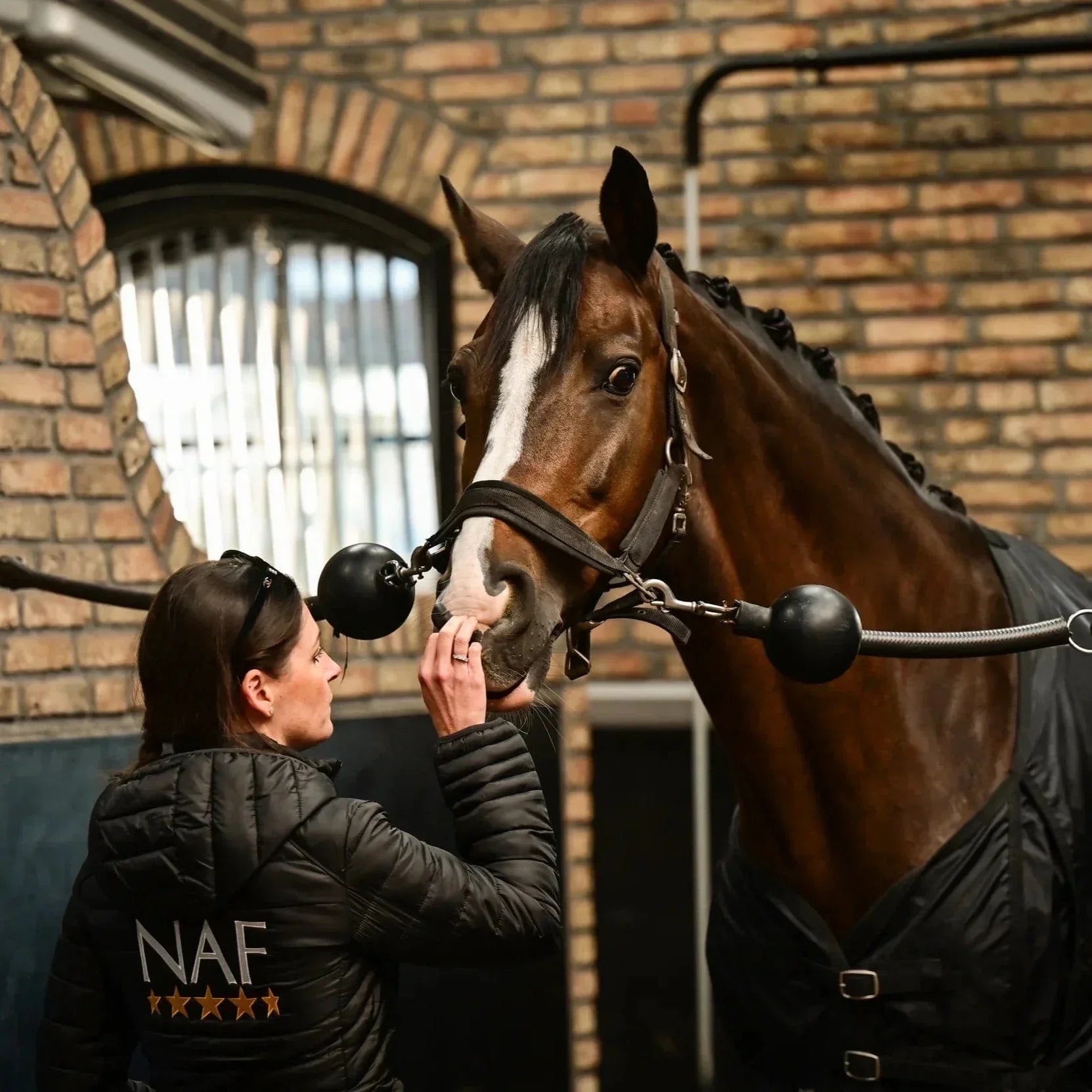

Horse behaviour is influenced by more than training or temperament. Increasingly, research shows that gut health plays an important role in mood, stress responses and behavioural reactivity in horses. This connection between the digestive system and the nervous system is known as the gut–brain axis.
In horses, the gut microbiome—the population of microbes living in the digestive tract—communicates constantly with the brain. These interactions influence not only digestion and nutrient absorption, but also stress responses, immunity and behaviour.
Understanding the equine gut–brain axis helps explain why diet, gut health and feeding management can influence a horse’s mood, reactivity and overall wellbeing.
What is the Gut-Brain Axis?
The gut–brain axis refers to the complex, two-way communication system linking the gastrointestinal tract with the nervous system.
This communication occurs between several key systems:
| Term | Meaning |
| CNS - Central Nervous System | The brain and spinal cord |
| ENS - Enteric Nervous System | A network of neurons within the digestive tract that regulates gut function. |
| GIT - Gastrointestinal Tract | The entire digestive system from mouth to rectum. |

The connection between digestion, immunity and behaviour has been recognised for many years, but scientific understanding of the gut microbiome’s influence on health and behaviour continues to grow rapidly.
Communication along the gut–brain axis works in both directions. Changes in the brain can alter the gut microbiota, while imbalances in gut microbes, known as dysbiosis can influence neurological responses and behaviour.
How the Horse Gut Communicates With the Brain
The biological mechanisms controlling the gut–brain axis are complex and still not fully understood. However, several pathways are known to play a role.
These include:
- neural pathways
- endocrine signalling
- immune responses
- microbial metabolites
Together, these systems create a multi-directional communication network between the gut and brain.
The Nervous System
The nervous system is central to gut–brain communication. Messages are transmitted between the brain and digestive tract through networks of neurons.
The enteric nervous system (ENS), often referred to as the “second brain”, contains millions of nerve cells embedded within the digestive tract that regulate gut motility, secretions and blood flow.
A major communication pathway is the vagus nerve, which connects the brain directly to the digestive organs. The vagus nerve forms part of the autonomic nervous system, meaning its activity occurs automatically without conscious control.
Neurotransmitters and Microbes
Neurotransmitters are chemical messengers used by the nervous system. They are active in both the brain and the gut. Interestingly, many of these molecules can be influenced by gut microbes.
The stability of the equine gut microbiome influences digestive efficiency and nutrient absorption. These factors can affect hormonal signalling and metabolic processes that ultimately impact behaviour and stress responses.
Researchers are also investigating how prebiotics, probiotics and postbiotic metabolites may help stabilise the gut microbiota, support the gut wall and influence mood and behaviour via the gut–brain axis.
Research on the Gut–Brain Axis in Horses
The idea that digestion affects emotions has existed for centuries. The word “gutsy” itself reflects this connection. However, scientific research is now providing clearer evidence of how gut health influences horse behaviour.
Much of this research focuses on the equine hindgut, where large microbial populations ferment fibre and produce essential nutrients.
Below are some key findings from recent studies.
Diet and Behavioural Reactivity
Diet composition has a strong influence on the equine microbiome.
Research shows that high-starch concentrate diets can alter hindgut microbial populations and are associated with increased behavioural reactivity in horses with studies that explored how dietary changes influence both microbiota and behavioural responses during stress tests, including novelty exposure and startle challenges.
When horses were moved from a high-fibre forage diet to a low-fibre, high-concentrate diet, researchers observed:
- alterations in hindgut microbial populations
- changes in gut chemistry
- increased behavioural reactivity during novelty tests
These concurrent changes in gut physiology and behaviour highlight the bi-directional nature of the gut–brain axis in horses.
How to Support the Gut–Brain Axis in Horses
Targeted nutritional support for the gut microbiota is increasingly recommended through research with improved understanding of the role of probiotics in equine digestion and other nutrients in overall gut health.
Maintaining a stable gut microbiome is an important part of supporting both digestive health and behaviour.
Practical strategies include:
- Feeding a high-fibre, forage-based diet
- Limiting high-starch concentrate feeds
- Introducing dietary changes gradually
- Maximising pasture turnout where possible
- Providing targeted nutritional support for the microbiome
- Supporting gut wall integrity with evidence-based nutrition
These approaches help maintain microbial balance within the hindgut and may support stable communication along the gut–brain axis.
Why Gut Health Matters for Horse Behaviour
Behaviour is not governed by the brain alone. Instead, it is shaped by a dynamic partnership between the brain and the gut, connected through the complex biological network known as the gut–brain axis.
Growing scientific evidence suggests that maintaining a healthy digestive system and stable microbiome may play an important role in supporting not only digestive efficiency and immune health, but also behaviour, mood and stress resilience in horses
References
- Appleton J (2018) The gut-brain axis: Influence of microbiota on mood and mental health. Integritive Medicine: A Clinician’s Journal. 17(4) 28-32
- Bulmer et al (2019) High-starch diets alter equine faecal microbiota and increase behavioural reactivity. Scientific Reports.9; 9(1) 18621
- Chang L et al (2022) Brain-gut-microbiota axis in depression: A historical overview and future directions. Brain research bulletin. 182. 44-56
- Collins S.M (1994) The gut-brain axis in IBD: an investigator’s perspective. Inflammatory Bowel Disease: Basic research, clinical implications and trends in therapy. 262-267
- Chudzik A et al (2021) Probiotics, prebiotics and postbiotics on mitigation of depressions symptoms: modulation of the brain-gut-microbiome axis. Biomolecules. 11(7) 1000
- Destrex A et al (2015) Changes of the hindgut microbiota due to high-starch diet can be associated with behavioural stress response in horses. Physiology & Behaviour. 149, 159-164
- Destrez A et al (2019) Dietary-induced modulation of the hindgut microbioate is related to behavioural responses during stressful events in horses. Physiology & Behavior. (202) 94-100
- Homer B et al (2023) Gut microbiota and behavioural issues in production, performance and companion animals: A systemic review. Animals (Basel) 25:13(9) 1458
- Jouany J-P et al (2009) Effect of live yeast culture supplementation on hindgut microbial communities and their polysaccharidase and glycoside hydrolase activities in horses fed a high-fibre or high-starch diet. Journal of Animal Science. 87(9) 2844-52
- Liu Y et al (2021) Proteomics analysis of the gut-brain axis in a gut microbiota-dysbiosis model of depression. Translational psychiatry. 11. 568
- Mach N et al (2020) Priming for welfare: gut microbiota is associated with equitation conditions and behavior in horse athletes. Scientific Reports. 10:8311
- Mach N et al (2021) Gut microbiota resilience in horse athletes following holidays out to pasture. Scientific Reports. 11: 5007
- Valigura H.C et al (2021) Dietary supplementation of a Saccharomyces cerevisiae fermentation product attenuates exercise-induced stress markers in young horses. Journal of animal science. 99(8) 1-11
Written by: Kate Hore, Head Registered Nutritionist - RNutr(Animal), R.Anim.Technol(Cert), BSc(Hons) - Find out more about Kate and our Technical Team HERE!