
Keeping our horses happy, healthy and learning, whatever the weather.
The dark days of winter alone are a challenge for us as horse owners. When we add in longer time stabled, wet fields, and potentially icy surfaces, it can be tricky to keep our horses exercised and engaged.
So, what steps can we take to keep bodies and minds active right through to spring?
Hire a school
If you’re short of a rideable surface at your yard, why not hire one? Check with local equestrian establishments, whether riding schools or private yards, for availability of their all-weather outdoor or indoor schools.
It’s a good idea to get together with a few friends to share the cost and build the fun. How about a ‘Chase me Charlie’ challenge, or just having friends on hand to help with moving poles for groundwork?
Taking your horse out to new environments not only helps to keep them fresh and interested but is also great experience for coping with future competitions or clinics away from home.

Teach them new Tricks
When physical exercise is limited why not try brain training your horse? Just like when training a dog, asking your horse to apply themselves and use their brain can be a real effort for both their energy and focus. After a good lesson you might find your horse yawning, licking or chewing as their way of relaxing and saying ‘phew, that made me think’.
Clicker training and positive reinforcement are excellent ways to educate your horse. Find the perfect motivating horse treats in our shop to reward your horse during training.

Playing a Game
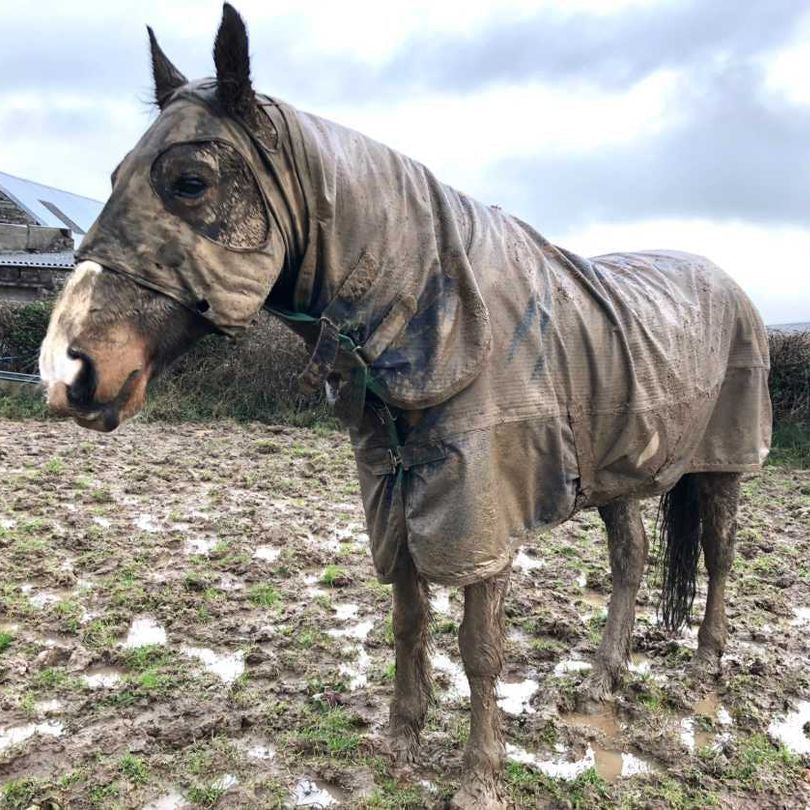
One game to consider, which potentially is also a real welfare win for your horse, is training them to tell you whether they need a rug or not. Yes, it can be done! It is worth remembering that horses have a much lower and wider Thermoneutral Zone (TNZ) than us humans, and are usually very happy in much colder conditions – so long as not cold and wet.
Researchers have used clicker training in a landmark mark study to train horses to communicate their preferences. The horses were trained to touch a symbol to indicate one of three different things:
- Rug on
- Rug off
- No change
All horses learned the symbols within two weeks. Once the horses had learnt what each symbol meant they were given free access to choose. Results showed that their choice was not random, but that they made clear decisions based on weather conditions. In general, the results were as follows.
- Cold (below 10oC), wet and windy: Horses chose to be rugged
- Warm weather: Horses consistently chose no rug in nice weather over 10oC
- Even warmer: A further study showed a strong preference for no rug over 20oC
You might learn as much, if not more, than your horse during this training, as we owners can be guilty of over-rugging our horses. Whilst it might feel like we’re wrapping them up snuggly, the potential issues from over-rugging include increased obesity, decreased movement, decreased self-grooming and sweating under their rug. Lead researcher, Professor Knut Bøe, summed it up as:
In general we found horses preferred to stay more often without a rug than the owner would have wanted.
Stable enrichment
Research shows that stabling significantly impacts our horses’ step count for the day. With maybe no surprise that far less movement is recorded for horses in their stables compared to when turned out. However, stabling is often a useful and necessary part of their winter regime, so how can we improve their stable time to encourage activity and keep them interested?
Split forage feeders
Horses evolved to graze for long periods, nibbling and walking, nibbling and walking. Their digestive efficiency works best with gentle movement. Therefore, rather than one large hay net or feeder, it is recommended to split their forage rations into at least two feeders and placed on opposite walls of the stable. This encourages gentle movement around the box, rather than standing still for hours and munching away.

Treat balls
Why not pop any pelleted feed in a treat ball rather than in a bucket? This simple trick can help extend feeding time and encourage natural foraging behaviours.

Scent play
Horses have a great sense of smell, which is a normal part of their natural assessment of their surrounding areas and food. Hiding a few delicious aromas such as a favourite Treat or carrot slice in their forage or treat balls can give them an engaging game that they can’t resist.
Did you know? Horses are now being trained across the world in search and rescue, and proving themselves just as good as their canine counterparts?
Turnout Tips
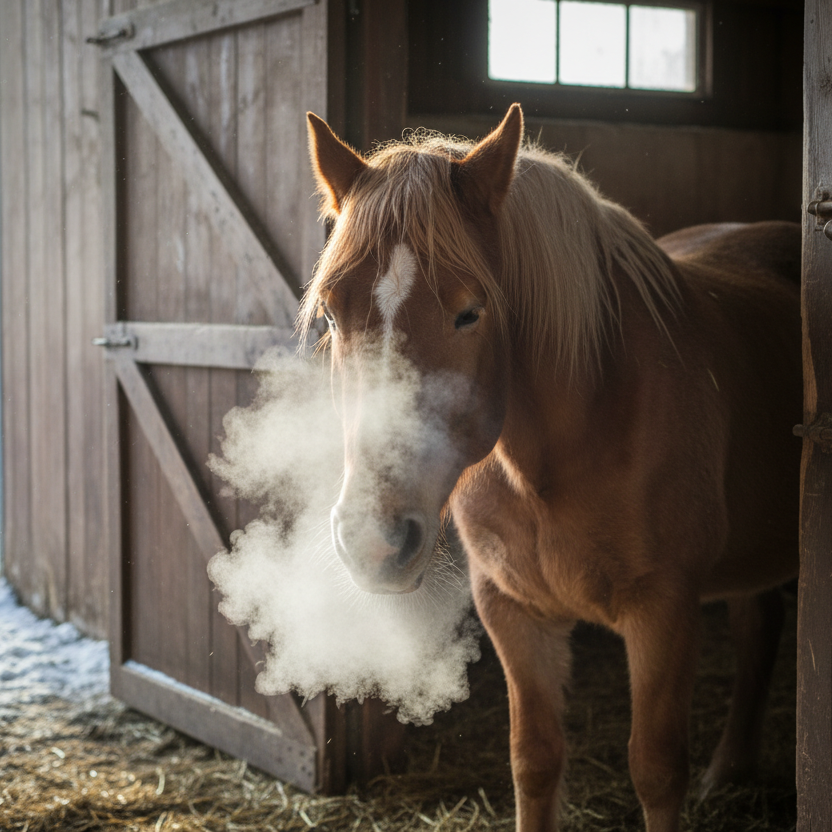
It may be cold and wet out, but for most horses and ponies nothing beats a bit of turnout time. Paddock turnout not only gives them more opportunity for self-exercise, but is also great emotionally, particularly when they can catch up with their paddock pals.
Careful turnout management helps protect your grazing and minimise mud problems for horses. Read our guide to Mud Management for Horse Paddocks for expert paddock care tips.
Although it can be tempting to keep them in on very cold and wet days, remember so long as they are adequately, not excessively, rugged they are generally much happier out. It is also important for gut health to keep to a routine. Sudden changes can cause imbalance in the hindgut microbiome leading to issues like behaviour change, a change in their droppings or even colic.
Health Checks
Finally, don’t forget, good health is a fundamental pillar of wellbeing. Make sure you are doing those regular health checks, to ensure winter worries aren’t hiding under rugs.
- Run your hands over them every day.
- Check under rugs for sores or rubs
- Pick out feet daily
- Watch for changes in droppings
Written by: Kate Hore, Head Nutritionist. RNutr (Animal), R.Anim.Technol (Cert), BSc(Hons). – Find out more about Kate and out Technical Team HERE.
Selected References
- Bowker, Robert M., Julie M Hubbard, Kara N. Corps, Kathryn A Natchek, Diana Blackwood and J. C. Griffin. “Twenty-Four Hour Movement Patterns of Domestic Horses onPasture and in Stalls as Assessed by a Step Activity Monitor.” (2020).
- Buvik, Turid, and Cecilie Mejdell. “Horses Can Learn to Use Symbols to Communicate Their Preferences.” Applied Animal Behaviour Science, (2016).